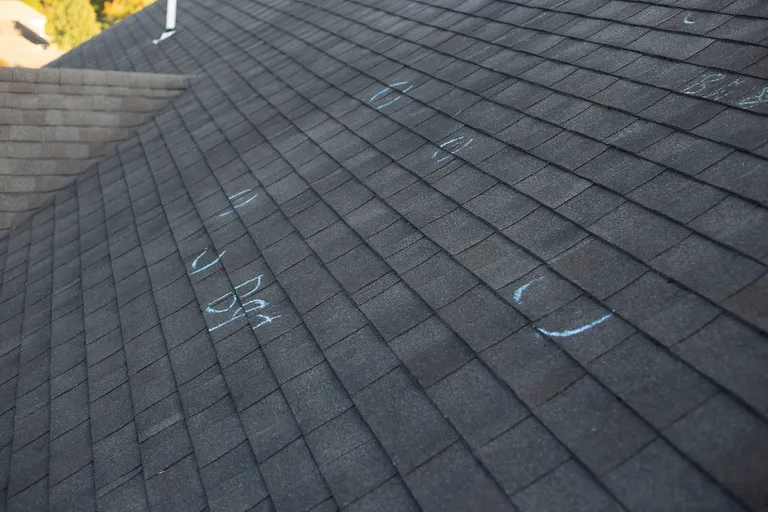
Storm damage siding replacement in Colorado Springs.
When a storm takes out enough of a wall that patching it is not honest work, the siding goes in the claim as a replacement. We run those jobs as the general contractor on the property — one inspection, one scope in Xactimate, one schedule — and bring in the siding crews to do the cladding. This page is about when replacement is the right call and what the job actually involves.
We are the general contractor, not a siding company.
L&N is a roofing company. When a hail or wind claim takes in more than the roof, we act as the general contractor for the whole property and bring in siding crews to perform the cladding work under our supervision. We do not describe ourselves as a siding installer, and we would rather you knew how the job is staffed before you sign anything.
What that arrangement gets you is the thing homeowners actually want after a storm, which is not a second trade to manage. One inspection covers the roof and the elevations. One scope goes to the adjuster in Xactimate with both as parts of the same loss. And when something needs chasing, one company is answerable for it rather than two pointing at each other.
We have been working storm claims in this county for fifteen years and we are insured for the general contracting we do. The siding crews we bring in are people we have worked with repeatedly, and their work is inspected by us before we call a job finished.
When a wall stops being repairable.
Most storm-damaged siding starts as a repair question. These six findings are what move it to replacement, and it is worth knowing them so you can tell whether a contractor is scoping honestly or scoping big.
The product is discontinued
The most common reason by far. If the profile or the color is no longer made, a partial repair leaves a visible band across the wall. This is where the like-kind-and-quality argument in your policy does the work, and it is won with documentation of the existing product rather than with persuasion.
Damage crosses most of an elevation
Storms do not hit walls evenly — one or two elevations take the impact depending on the direction the cell moved. Once damage is spread across the majority of a face, replacing that whole elevation costs little more than patching it and looks like a house rather than a repair.
The weather barrier is breached
The layer behind the cladding is what actually keeps water out. Where impact has torn it or wind has opened it up, the wall is no longer weather-tight even where the siding looks acceptable. You cannot repair a barrier you cannot see without taking the cladding off, and cladding rarely survives removal.
Sheathing is wet or rotten
Found once the wall is open, and it changes the job. Wet sheathing has to come out and be replaced, and the surrounding insulation checked. This is the finding that most often turns a modest scope into a substantial one, and it is why we open a wall before finalizing numbers rather than after.
Panels are brittle from age and UV
At 6,035 feet the summer UV index runs very high, in the 9 to 11 range, and older vinyl gets brittle under it. Brittle panels crack when they are unclipped, so a repair on aged siding tends to create more damage than it fixes. Sometimes the honest answer is that the wall cannot be worked on without replacing it.
Repeated storm damage
El Paso County averages seven to ten severe hail days a year, with June consistently the worst month. Walls that have been patched through two or three seasons accumulate mismatched sections and weakened fastening. At some point the accumulated patchwork is itself the argument for a single clean replacement.
What water does once it gets behind siding.
Siding is not waterproof, and it was never meant to be. It is a rain screen — it takes the weather, sheds most of it, and relies on the weather-resistive barrier behind it to handle whatever gets past. That arrangement works well right up until the barrier is compromised, and then it fails quietly.
Water that gets behind a wall does not drain out. It collects at the bottom plate and around window openings and stays wet. The sheathing softens and loses its structural value, insulation stops performing, fasteners corrode, and eventually you get staining on the inside face of the wall.
The timeline is the problem. A storm in June puts water in a wall, and the evidence appears indoors two winters later, long after the claim deadline has passed. This is the single strongest reason to have walls inspected after a storm even when the cladding looks broadly intact — not because the siding is urgent, but because what is behind it is on a clock you cannot see.

How a siding replacement actually runs.
We coordinate the sequence; the siding crew performs the cladding work. Knowing the order helps, because the steps most often skipped are the ones you cannot see afterward.
Document before anything moves
Every elevation photographed, damage marked, the existing product identified by profile and color so the matching argument can be made from evidence. This happens before a single panel comes off, because once the wall is open the proof of what was there is gone.
Scope written in Xactimate
The roof and the elevations go into one estimate in the platform your adjuster already uses, with siding, trim, wraps and accessories as separate line items. Accessories are where scopes get thin, and they are the first thing we check on an insurer estimate.
Tear-off and inspection
Cladding comes off and the sheathing gets examined while it is exposed. This is the point where a scope can change, and if it does we document the finding and file a supplement rather than quietly absorbing it or quietly billing for it.
Weather barrier and flashing
New house wrap where the old barrier is compromised, and flashing corrected at windows, doors and every penetration. This is the invisible half of the job and the half that determines whether the wall stays dry for the next twenty years.
Cladding installation
The siding crew installs to the manufacturer specification — correct fastening, proper expansion allowance, courses run straight off a level line. Vinyl in particular has to be hung rather than pinned tight, and a crew that nails it home leaves you a wall that buckles in the first hot week.
Walkthrough and sign-off
We inspect the work before calling it finished, walk the property with you, and confirm the completed scope matches what the claim paid for. If the insurer settled on actual cash value with recoverable depreciation, this is also the documentation that releases the rest.
Wind claims and hail claims are argued differently.
Hail leaves a pattern. Impacts of a consistent size, on the elevations facing the direction the storm came from, matching what the same storm did to the roof. Once that pattern is photographed it largely speaks for itself.
Wind does not leave a pattern; it leaves an absence. Panels pulled loose from the nail hem, a course unzipped along its length, a section lying in the yard. Because that resembles age-related failure, wind claims come down to establishing that a specific event caused it — the date of loss, what the weather did that day, and the condition of the wall before it. It is the harder documentation job, and a good reason not to tidy the yard before somebody has photographed it.
Both run on the same clock: one year from the date of loss to report. Inside that window an inspection is free. Outside it there is nothing left to inspect for.
When we are the wrong call.
This is storm claim work. If you want to re-side your house as a remodel, with a new look and no loss behind it, we are not the right company, and we will tell you that in the first conversation rather than after an estimate. A dedicated siding company will do that job better and cheaper than a roofing contractor coordinating it.
We will also tell you when the damage does not justify a claim. Not every dented panel is worth a deductible and a claim on your record. If the honest read is that you should leave it, that is what we will say.
For the broader picture of how exterior storm damage is assessed and what falls inside a claim, see our siding claim work overview.
Get the Whole Exterior Looked At
Tell us when the storm was and what you have noticed. We'll inspect the roof and the elevations together and tell you honestly whether there is a claim here.
Siding Replacement Questions
No. L&N is a roofing company. On a full-property storm claim we act as the general contractor and bring in siding crews to perform the cladding work under our supervision. You deal with us from the first inspection to the final walkthrough, and we carry responsibility for the result. What we do not do is present ourselves as a siding company, because we are not one.
Wind is a named peril on standard homeowner policies, so damage caused by it is generally covered subject to your deductible. Wind claims on siding turn on evidence of a specific event rather than gradual wear — panels pulled from their nail hem, courses unzipped along a run, a whole elevation loosened where it was not before. The documentation matters more than on a hail claim, because wind leaves less of a signature behind.
It is the reason a storm-damaged wall so often turns out to be a replacement rather than a repair. Siding is a rain screen, not a waterproof layer — the weather barrier behind it does the actual sealing. Once impact or wind breaks that barrier, water reaches the sheathing and stays there. You get sheathing rot, insulation that no longer performs, and eventually staining inside. None of it is visible until the cladding comes off.
On a covered claim the number that matters is not our price, it is the scope. We write the damage up in Xactimate, line by line, and your settlement is built from those line items. What determines the size of it is how many elevations are affected, whether the existing product can be matched, and what we find on the sheathing once the wall is open. We do not quote a square-foot figure before an inspection.
Often, yes, and it hinges on matching. Siding profiles and colors are discontinued constantly, and a patched section in a near-match reads as a repair from the street. Colorado policies typically promise replacement with materials of like kind and quality, and Colorado courts have interpreted that contract language to support matching where it is ambiguous. Whether the argument holds on your house depends on what we can document about the existing product.
In Colorado you have one year from the date of loss to report a claim to your insurer, and the deadline runs whether or not you have noticed the damage yet. That is the practical problem with siding: it hides. If your neighborhood took one of the June 2026 storms, you have until June 2027, and the walls should be looked at well before then.
Storm took more than the roof?
We'll document the whole property, write one scope, and run the claim as your general contractor from inspection to final walkthrough.
Related Reading
What Does Hail Damage Actually Look Like on an Asphalt Shingle Roof? (Monument, CO Guide)
See what real hail damage looks like on asphalt shingles vs. cosmetic marks, and why Monument's spot on the Palmer Divide makes this worth checking after storms.
What Is a Roof Insurance Claim? Coverage, Exclusions, and Why Claims Get Denied
A roof insurance claim lets you file for storm or sudden damage under your homeowners policy. Learn what's covered, what's not, and why Colorado claims get denied.
What Is an Ice Dam? Causes, Damage, and Prevention
An ice dam is a ridge of ice that traps melting snow on your roof. Learn how ice dams form, why they cause leaks, and how to prevent them in Colorado Springs.
How Much Does Roof Replacement Cost in Fountain, CO?
A typical Fountain, CO roof replacement runs $18,000–$21,500 for a single-story home as of April 2026. See what drives the price up or down.