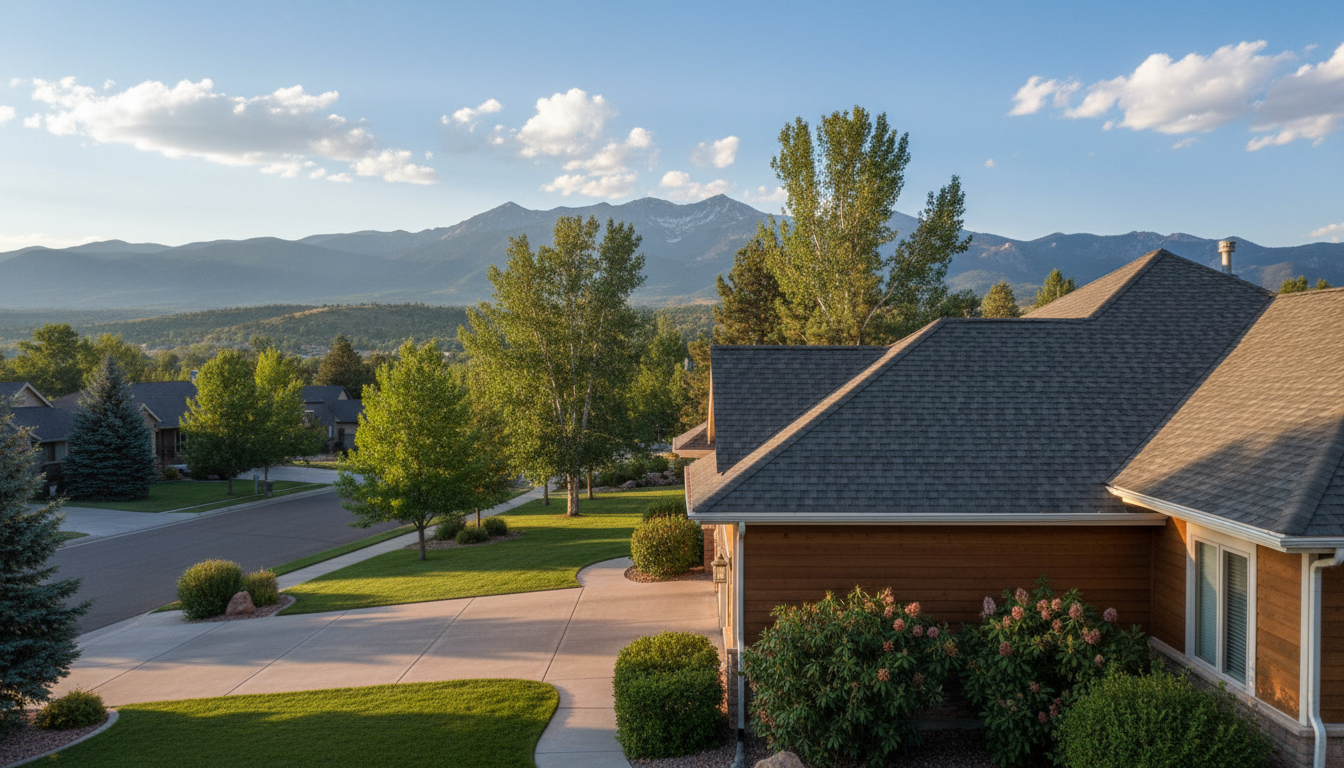
Real hail damage on an asphalt shingle roof shows up as small, randomly scattered dark spots where the shingle's protective granules have been knocked loose, exposing the black asphalt mat underneath — not the uniform discoloration or streaking most homeowners assume it looks like. The marks are soft to the touch (a real hit compresses slightly under thumb pressure, unlike a scuff), irregular in shape, and clustered more heavily on roof slopes facing the direction the storm came from. Knowing that distinction matters in Monument, where the terrain itself makes hail more common than almost anywhere else on the Front Range.
What Real Hail Bruising Actually Looks Like
Walk a hail-hit roof and you're looking for a few specific signs, not a general "does this look bad" impression:
- Granule loss in a random pattern — small dark circles or ovals, usually 1/2" to 1", where granules have been knocked away. Wind-driven granule loss from age looks more like streaking; hail damage looks like scattered impact points.
- Soft spots under thumb pressure — a real hail bruise compresses slightly because the fiberglass mat underneath has been cracked, even if the surface still looks mostly intact.
- Exposed mat or fiberglass — in harder hits, the asphalt coating is gone entirely and you can see the black or gray fiberglass base. This is functional damage, not cosmetic.
- Damage clustered on one or two slopes — hail usually comes in at an angle with the wind, so a roof with heavy hits on the north-facing slope and almost nothing on the south slope is a normal, expected pattern — not a sign the damage isn't real.
Soft metal is often the fastest confirmation: dented gutters, bruised or split roof vents, and dinged AC condenser fins tend to show up alongside real shingle damage, since hail dents soft metal more visibly than it marks asphalt.
Why Monument Gets Hit More Than Most of the Front Range
Monument sits around 7,000 feet on the Palmer Divide, a ridge of high terrain roughly 1,000 feet above Colorado Springs itself. That elevation heats up faster in the afternoon sun, and storms along the divide tend to fire earlier in the day than they do over the lower terrain around it. Forecasts and storm warnings for this area come from the National Weather Service office in Pueblo, which covers El Paso County.
Zoom out to the wider region and the pattern holds: Colorado Springs averages 7-10 severe hail days a year, with June typically the most damaging month as the summer convective season ramps up. Monument, sitting higher and closer to where those storms first fire, tends to catch the early, often most intense cells before they've weakened on their way toward the valley floor. If you own a home along the Palmer Divide corridor, treating a hailstorm as "probably nothing" is a worse bet here than almost anywhere else in El Paso County.
Cosmetic Damage vs. Functional Damage — Be Honest About the Difference
Not every hailstorm that rattles your windows means you need a new roof, and it's worth saying that plainly. A lot of what homeowners see after a storm — light granule scuffing, minor color variation, a few surface dings — is cosmetic. It doesn't shorten the shingle's life or affect how it sheds water, and chasing an insurance claim over cosmetic marks alone usually isn't worth the deductible.
Functional damage is different: cracked fiberglass mat, exposed asphalt, punctures, or bruising dense enough across a slope that it will accelerate wear and eventually lead to leaks. That's the kind of damage that justifies a claim. The honest answer, most of the time, is that you can't tell the difference from the ground or from a phone photo — it takes someone actually walking the roof and checking for soft spots and mat exposure to know which category you're in.
What To Do If You Suspect Hail Damage
Get a free roof inspection before you decide anything, ideally within a few weeks of the storm while the damage is fresh and easy to document. Colorado homeowner policies typically give you up to a year from the date of loss to report a claim and around two years to file it, but waiting makes the damage harder to prove and easier for an adjuster to dispute. Many Colorado insurers also now require or incentivize Class 4 impact-resistant shingles specifically because of how often hail hits this region — worth asking about if you end up replacing anything.
If the inspection turns up real functional damage, get it documented and start the insurance claims process while the evidence is clear. If it's cosmetic, you'll at least have a straight answer instead of a guess.
Not sure what you're looking at after a storm in Monument? Call (719) 355-0648 for a free roof inspection, or read more about handling a hail damage claim in El Paso County.
Frequently Asked Questions
Can I identify hail damage myself from the ground?
You can spot warning signs from the ground — dented gutters, dinged AC fins, or bruised siding — but you cannot accurately grade shingle damage without getting on or above the roof. Bruising and granule loss are only visible up close, so a ground-level look should prompt a real inspection, not replace one.
Does every hailstorm in Monument mean I need a new roof?
No. Most hailstorms leave shingles fully functional, even with some granule loss. A new roof or insurance claim is only justified when an inspection finds actual mat exposure, cracking, or enough bruising density to shorten the roof's remaining life. Get it checked, but don't assume the worst.
How long do I have to file a hail damage insurance claim in Colorado?
Most Colorado homeowner policies give you up to a year from the date of the storm to report the loss, and typically two years to file the claim itself. Check your specific policy, but don't wait — damage that's easy to document right after a storm gets harder to prove months later.
What's the difference between cosmetic and functional hail damage?
Cosmetic damage is granule scuffing or minor color variation that doesn't affect how the shingle sheds water. Functional damage — bruising that's cracked the fiberglass mat, punctures, or fractured seals — actually shortens the roof's service life. Only functional damage justifies repair or replacement.
Why does Monument seem to get hit by hail so often?
Monument sits on the Palmer Divide, a high ridge that heats up and triggers thunderstorms earlier in the day than the surrounding lower terrain. That's a big reason this stretch of the divide sees some of the most frequent large-hail activity of any populated area in the country.