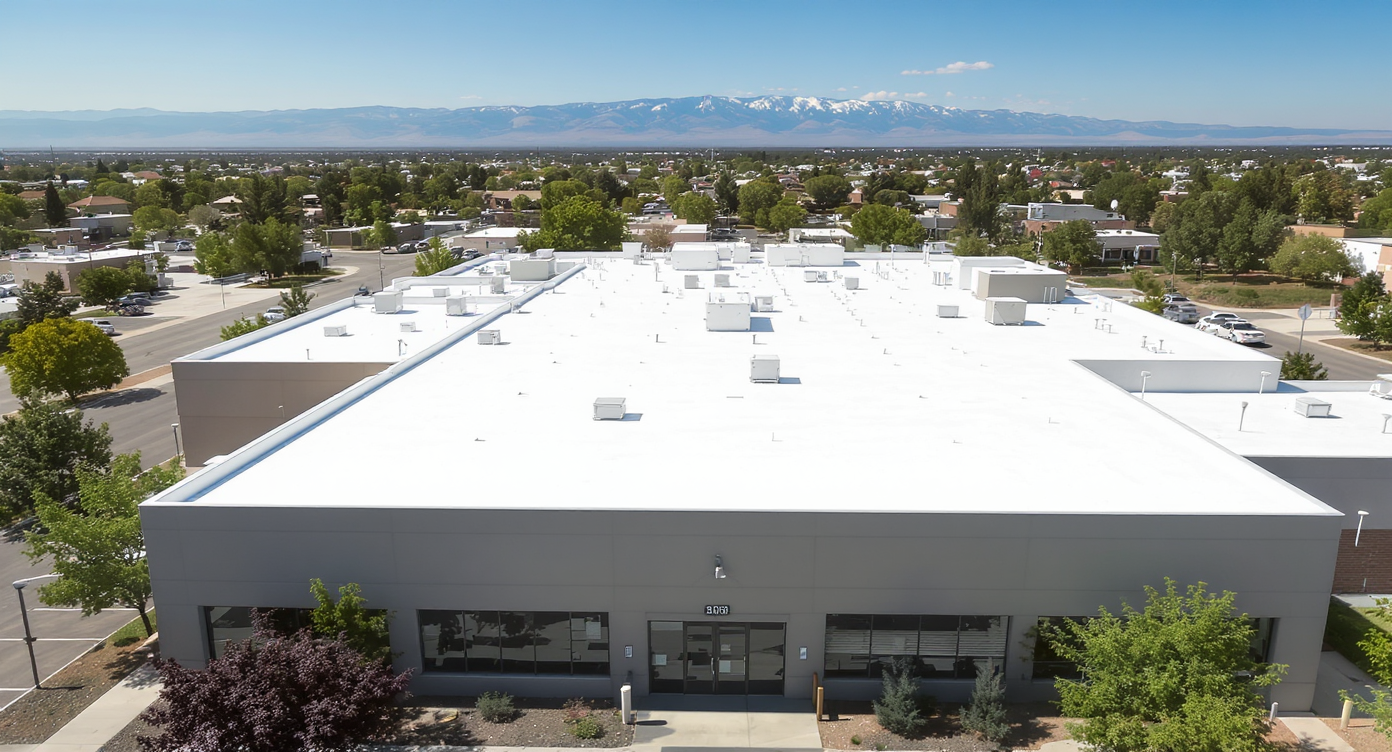
TPO roofing is a single-ply membrane made of thermoplastic polyolefin, installed on flat and low-slope roofs and sealed with heat-welded seams into one continuous, watertight sheet. It's one of the most widely used commercial roofing materials in the country, and for good reason: it combines a reflective white surface, strong seam performance, and a lower price point than most competing membranes. If you own a building with a flat or gently sloped roof, TPO is very likely one of the options a contractor will put in front of you.
What Does TPO Mean in Construction?
In construction and roofing, TPO stands for thermoplastic polyolefin. It's a single-ply roofing membrane made from a blend of polypropylene and ethylene-propylene rubber, sold in wide white rolls and heat-welded together at the seams. When a contractor, architect or spec sheet says "TPO," they mean this membrane roof system on a flat or low-slope building.
How TPO Actually Works
TPO comes in large rolls of flexible white membrane, typically manufactured in 45, 60, and 80-mil thicknesses (a mil is one-thousandth of an inch). The membrane is rolled out across the roof deck over a layer of insulation, then fastened or adhered down. Where two sheets overlap, a hot-air welder fuses them together.
That heat-welded seam is the defining feature. Because TPO is a thermoplastic, heat softens it enough to bond two sheets into a single piece of material — no adhesives or tapes at the laps that can dry out and fail over time. A properly welded seam is often stronger than the membrane itself, which is why seam quality is the single most important thing to inspect on any TPO installation.
The bright white surface matters too. It reflects sunlight rather than absorbing it, which keeps the roof and the space below cooler in summer and reduces cooling loads. For owners watching energy bills, that reflectivity is a real selling point.
How Long It Lasts and What It Costs
A well-installed TPO roof generally lasts 20 to 30 years. Manufacturer warranties track thickness closely — roughly 20 years for 45-mil membranes, 25 years for 60-mil, and 30 years for 80-mil. Thicker membranes cost more up front but hold up better against foot traffic, hail, and UV, so the thicker options usually earn their premium on exposed roofs.
Cost is harder to pin to a single number because it swings with building size, membrane thickness, the insulation package underneath, and how much of the old roof has to be removed first. A recover over a sound existing roof costs far less than a full tear-off down to the deck. The honest answer is that TPO pricing should be quoted per project after an inspection, with an itemized scope you can actually compare against other bids — not a vague per-square-foot figure.
TPO vs. Other Flat-Roof Options
TPO isn't the only single-ply membrane, and it isn't automatically the best for every building:
- EPDM (rubber): Proven, flexible, and long-lasting, but usually dark-colored, so it absorbs heat instead of reflecting it. A solid choice where energy reflectivity isn't the priority.
- PVC: Handles grease, chemicals, and ponding better than TPO, which makes it the go-to over restaurant kitchens and some industrial buildings — at a higher price.
- Modified bitumen / built-up: Older multi-layer systems still used on some roofs, generally heavier and more labor-intensive to install.
The right membrane depends on your roof's slope, what's exhausting onto it, how much sun it takes, and your budget. A contractor who recommends the same product for every building isn't really assessing your roof.
Is TPO Right for a Colorado Building?
Colorado's Front Range is a punishing environment for any roof. At elevation, UV exposure is intense year-round, summer brings frequent severe hail, and winters load roofs with heavy snow. For a flat or low-slope commercial roof here, those conditions argue for a thicker TPO membrane (60 or 80-mil rather than 45) and meticulous seam welding, because thin membranes and weak seams are exactly what fail first under hail impact and freeze-thaw stress.
The reflective surface is a genuine advantage at altitude, where UV load is high, but reflectivity means nothing if the seams leak. When you evaluate a TPO bid for a Colorado building, focus on membrane thickness, the insulation R-value, and how the contractor handles flashings at parapet walls and rooftop equipment — that's where low-slope roofs actually fail.
If you're weighing TPO against a sloped-roof material for a mixed building, it's worth comparing it to metal roofing for the pitched sections, since many Front Range commercial buildings use both. And whatever membrane you choose, the installation matters more than the brand name on the roll.
A note on scope: L&N Construction doesn't install or repair flat or low-slope roofs (TPO, EPDM, PVC, modified bitumen, built-up or roof coatings). We work on pitched shingle and metal roofs. This guide is general information to help you understand the system and hire the right membrane contractor.
Frequently Asked Questions
What does TPO stand for in roofing?
TPO stands for thermoplastic polyolefin, a single-ply roofing membrane made from a blend of polypropylene and ethylene-propylene rubber. It's one of the most common materials used on flat and low-slope commercial roofs. The 'thermoplastic' part is what lets its seams be heat-welded together into a continuous, watertight sheet.
How long does a TPO roof last?
A properly installed TPO roof typically lasts 20 to 30 years, and manufacturer warranties track membrane thickness: roughly 20 years for 45-mil, 25 years for 60-mil, and 30 years for 80-mil membranes. Lifespan depends heavily on installation quality, thickness, and how well the roof is maintained. In high-UV, high-hail environments like Colorado's Front Range, thicker membranes are the safer choice.
Is TPO better than EPDM or PVC?
It depends on the building. TPO offers a reflective white surface and heat-welded seams at a lower cost than PVC, which makes it popular for energy-conscious owners. EPDM (rubber) is proven and flexible but is usually dark and absorbs heat. PVC handles chemical exposure and grease better, which matters for restaurants. There's no universal winner — the right choice depends on the roof's slope, exposure, and budget.
Can TPO be installed over an existing roof?
Sometimes. TPO can be installed over some existing single-ply or built-up roofs if the substrate is sound and dry and local code allows a recover rather than a tear-off. But if the existing roof holds trapped moisture or has widespread deck damage, a full tear-off is the right call. Only an on-site inspection can determine which applies.
How much does a TPO roof cost?
TPO pricing varies widely by building size, membrane thickness, insulation, and roof access, so it's quoted per project rather than by a flat per-foot number. The bigger cost drivers are usually the insulation package and how much of the old roof has to come off. Get an itemized scope, not just a bottom-line figure, so you can compare bids fairly.