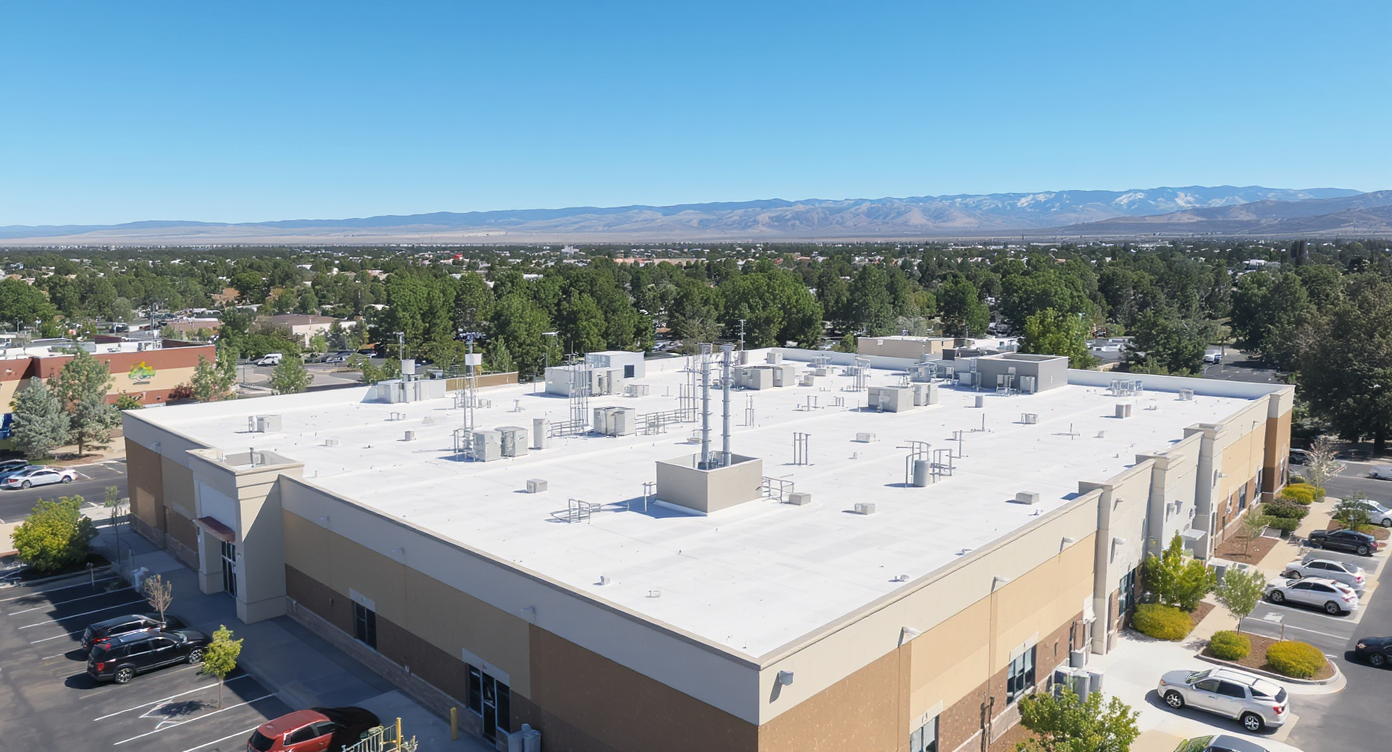
Looking for commercial roofing in Colorado Springs? Which company ranks first matters less than four things: whether the contractor is local, licensed and insured, experienced on your specific roof system, and able to document a hail claim. Commercial roofs on the Front Range take a beating from hail, UV, and snow load, and the wrong contractor on a flat roof costs you far more in slow leaks than a residential mistake ever would. Here's how to choose well.
L&N Construction handles commercial roof repair, inspections and replacement on small commercial, multifamily and HOA buildings around Colorado Springs with pitched shingle or metal roofs. We don't install or repair flat or low-slope roofs (TPO, EPDM, PVC, modified bitumen, built-up), so if your building has one, use the checklist below to pick the right membrane contractor.
What Actually Separates Commercial Roofers
Any company can call itself a commercial roofer. A few things tell you whether they can actually protect your building:
- Local and established. A contractor based in the Pikes Peak Region will be here to honor a warranty and respond to a leak — not chasing storms across state lines.
- Licensed and insured. Confirm both general liability and workers' comp. On a commercial job, an uninsured crew is a liability that lands on you.
- Experienced on your system. Flat and low-slope roofs use single-ply membranes like TPO, EPDM, and PVC. Metal and shingle work differently. Make sure their experience matches what's on your building.
- Manufacturer certified. Certification from the membrane maker is what unlocks the strongest system warranties — and it means the crew is trained on that specific product.
- Itemized scope. A real commercial bid breaks out tear-off, insulation, membrane, flashing, and equipment curbs. A single lump-sum number is a red flag.
Why Commercial Roofs Fail Differently
Residential hail damage announces itself over time. Commercial flat-roof problems are quieter and more expensive. Low-slope roofs carry far more rooftop equipment — HVAC units, exhaust fans, drains, and penetrations — and most leaks start at the flashing around those features, not out in the open field of the membrane.
That's why documentation and maintenance matter so much on commercial buildings. A slow leak through a failed flashing seam can soak insulation and deck for months before anyone inside notices a stain, and by then the commercial roof repair is a tear-out of wet insulation rather than a simple patch. Regular, documented inspections — twice a year plus after storms — are the cheapest insurance a building owner has.
The Colorado Springs Commercial Roofing Environment
Colorado Springs is a genuinely hard place to keep a roof. The city sits at 6,035 feet, among the highest metro elevations in the country, where summer UV is intense enough to age membranes faster than lower markets. And it sits squarely in hail country: El Paso County averages 7–10 severe hail days a year, with June historically the most damaging month, and consistently ranks among the top counties in the nation for hail-related insurance claims.
For a commercial roof, that hail exposure argues for thicker, more impact-resistant systems — 60 or 80-mil membranes rather than thin ones — and meticulous flashing work around all that rooftop equipment. It's worth understanding that even on a well-built commercial roof, hail damage is often surface-level bruising and membrane scarring rather than an obvious puncture, which is precisely why it gets overlooked until a documented inspection finds it.
When damage does occur, coverage generally works like residential storm claims: a commercial property policy covers hail and wind damage subject to your deductible, and the completeness of the claim depends heavily on documentation. A contractor who photographs everything, builds a detailed estimate, and meets your adjuster on the roof gives the insurance claim its best shot at a full scope. The Colorado Division of Insurance enforces prompt-payment rules that protect building owners through that process.
Colorado Springs-Specific Considerations
Colorado Springs has a large stock of light-industrial and commercial buildings across districts from the north-side business parks to the downtown corridor, many with flat or low-slope roofs installed a decade or more ago that are now overdue for honest assessment. Property managers juggling multiple buildings especially benefit from a maintenance relationship with a local contractor who tracks each roof's condition over time rather than only showing up after a leak. The combination of altitude UV and repeated hail seasons means a Colorado Springs commercial roof that's neglected between storms ages far faster than the same roof would in a milder market.
Need an honest look at your commercial roof in Colorado Springs? Call (719) 355-0648 or schedule a free inspection. If it's a pitched roof, we'll assess your commercial roofing system, document any storm damage, and tell you honestly what it needs — no pressure.
Frequently Asked Questions
What should I look for in a commercial roofing company in Colorado Springs?
Look for a local, licensed, and insured contractor with real experience on the low-slope systems your building uses — TPO, EPDM, PVC, or metal — plus manufacturer certification, references on comparable buildings, and a willingness to provide an itemized scope rather than a single bottom-line bid. In a hail market like Colorado Springs, also confirm they handle insurance claims and can document storm damage for your carrier.
How is commercial roofing different from residential?
Commercial buildings usually have flat or low-slope roofs that use single-ply membranes like TPO or EPDM instead of the sloped asphalt shingles common on homes. They also carry more rooftop equipment — HVAC units, vents, and penetrations — which means more flashing detail, and failures tend to show up as slow leaks rather than obvious damage. That changes both how you inspect them and how you maintain them.
Does commercial roof damage get covered by insurance in Colorado Springs?
Storm damage to a commercial roof is generally covered under a commercial property policy the same way residential hail and wind damage is, subject to your deductible and policy terms. The key is documentation: a contractor who can photograph the damage, build a detailed estimate, and meet the adjuster on the roof gives your claim the best chance of a complete scope.
How often should a commercial roof be inspected in Colorado Springs?
Twice a year at minimum — spring and fall — plus after any significant hail or wind event. Colorado Springs sits in one of the highest hail-claim regions in the country, and flat-roof damage is easy to miss because it rarely shows from the ground. Regular documented inspections catch membrane and flashing problems before they become interior leaks.
What roofing systems work best for Colorado Springs commercial buildings?
For flat and low-slope roofs, thicker single-ply membranes (60 or 80-mil TPO or EPDM) hold up better against the region's hail and UV than thin membranes. Sloped sections often use standing seam metal or impact-resistant shingles. The right system depends on the building's slope, exposure, and use — there's no single best answer, which is why an on-site assessment matters.