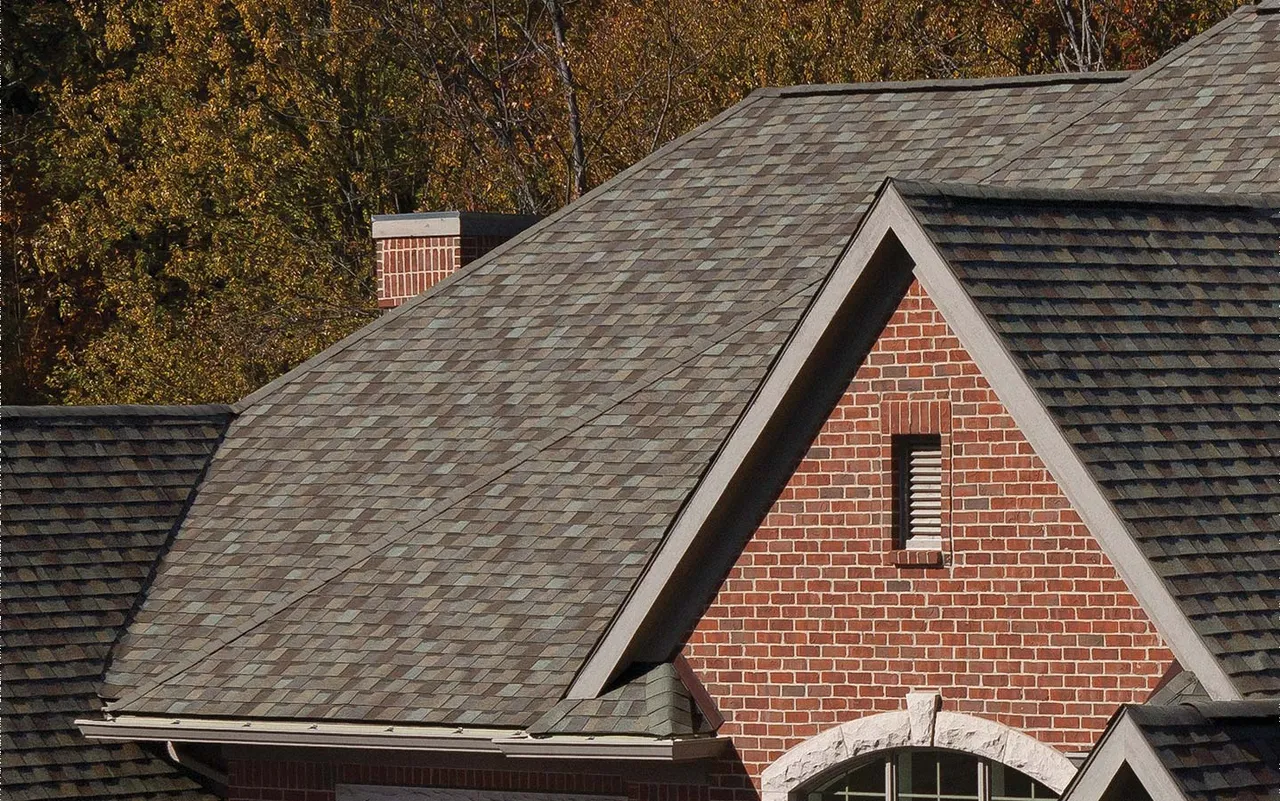
Architectural shingle roof installation in Colorado Springs.
Two crews can install the same shingle from the same pallet and produce roofs that behave completely differently in year eight. This page is about the installation rather than the product — the nailing, the starter, the valleys, the ventilation — because that is where the difference between competing bids actually lives, and none of it is visible from the ground once the job is finished.
What this climate does to an asphalt roof.
Colorado Springs sits at 6,035 feet. There is less atmosphere between the sun and your roof than almost anywhere else a US city is built, and summer UV index readings here run very high, in the 9 to 11 range. UV drives the asphalt binder in a shingle to lose its volatiles and go brittle. That process is what a shingle warranty is really counting down, and it runs faster here.
Then hail. El Paso County averages seven to ten severe hail days a year, June consistently the worst month, and severe hail moved through the county again during the June 2026 storm season. Impact-rated shingles are common in this region for that reason. And then winter — 38 to 45 snow days, freeze-thaw cycling, and flashing failures that reliably announce themselves in spring.
None of that is an argument for a particular brand. It is an argument for the parts of an installation that people economize on: the nailing pattern, the ice barrier, the valley detail, and the ventilation. Those are what determine whether a roof reaches its rated life in this climate or falls well short of it.

What a proper architectural shingle install involves.
Every bid describes these steps. Knowing what each one is for is what lets you tell a thorough scope from a thin one with the same headline number.
Tear-off to the deck
Everything comes off, including the old underlayment. You cannot assess a deck through a shingle, and an overlay forfeits the only opportunity you get to correct the layers below. Magnetic sweep of the property afterwards is part of the job, not a favor.
Deck inspection and repair
Soft, delaminated or rotted sheathing gets replaced, and long-standing leaks are usually worse underneath than the interior staining suggested. Priced as a unit rate so you pay for the sheets actually replaced, and on a claim it is documented while the roof is open.
Ice barrier and underlayment
Self-adhering membrane at the eaves and in the valleys, then underlayment across the field. In a freeze-thaw climate this is the layer that handles water that gets past the shingles — and water does get past shingles, which is the entire reason the layer exists.
Starter course and drip edge
A dedicated starter strip at eaves and rakes, not an inverted field shingle, and metal drip edge along the perimeter. This is where wind gets under a roof and begins peeling it. Older Colorado Springs homes frequently have neither, and neither is expensive to do correctly.
Nailing to the manufacturer pattern
Placement, count and depth, following the specification for the wind rating being claimed. Overdriven nails cut the mat, high nails miss the laminate entirely, and both are invisible once the next course is down. This is the single most consequential thing a crew can rush.
Valleys, flashing and penetrations
Valley method chosen deliberately, step flashing replaced rather than reused at walls and chimneys, and new boots at the pipes. Nearly every leak we get called out to starts at a detail like these rather than out in the open field of the roof.
Ventilation is part of the roof, not an accessory.
A replacement that reinstates the ventilation arrangement that was already there is a replacement that inherits whatever was wrong with it. Heat trapped under the deck ages shingles from underneath, and in winter it is one of the mechanisms behind ice damming at the eaves. Both shorten a roof that is otherwise correctly installed.
The part that gets missed is intake. Exhaust at the ridge without adequate intake at the soffit does not move much air, and adding more ridge vent does not fix it. Balance is the requirement, and it is worth checking whether a bid addresses it at all. We go into this properly on our roof and attic ventilation page.
Product and color
We install Owens Corning shingles. Confirm the color against your HOA palette before ordering. Restrictions are common in Colorado Springs suburbs and approvals take time you may not have on a claim timeline.
Impact rating
Class 4 rated products are common in this region given the hail frequency. Ask your carrier what discount, if any, applies to your policy — terms vary and the answer changes whether the upgrade pays for itself.
Pitch limits
Shingles have a manufacturer minimum slope. Low-slope sections on additions and mid-century designs need a membrane system, not shingles, and a bid that shingles them is storing up a leak.
Warranty, two documents
A manufacturer material warranty and a contractor workmanship warranty cover different failures. Ask which a bid includes, for how long, and what voids each — most real-world failures are workmanship, not material.
How we quote: We measure the roof and write the scope in Xactimate, so an adjuster can read it line for line against their own. You get itemized line items instead of a single number, which makes it obvious what is included, what is an upgrade, and where a cheaper bid got cheaper.
Most of these roofs start with a storm.
A large share of the architectural shingle roofs installed in this county are not planned purchases. Hail lands, a claim is opened, and the material decision arrives bundled with a settlement and a deadline. That is a poor moment to be learning what a starter course is.
If that is your situation, two things are worth doing early. Confirm what the carrier scope actually includes, since ice barrier, drip edge, ridge and ventilation are the items most often missing, and start the HOA color approval immediately rather than when the material is ordered. The reporting clock in Colorado is one year from the date of loss, so June 2026 hail runs out in June 2027.
We handle the claim side ourselves rather than handing you to someone else. How that works is on our insurance claims page. The wider picture of what we do on homes is on the residential roofing page.
Get Your Roof Measured
Tell us about the house and we'll inspect it, measure it, and give you an itemized scope you can compare properly.
Architectural Shingle Questions
Architectural shingles are laminated — two or more layers bonded together — which makes them thicker, heavier, and better at resisting wind uplift and impact than a single-layer three-tab. They also read as a textured, dimensional surface rather than a flat one. Most homeowners replacing a three-tab roof move up to architectural rather than back.
They cost more than three-tab, they are heavier, and on a very low-slope roof they are not the correct product at all — below the manufacturer's minimum pitch you need a membrane system rather than shingles. They are also not indestructible in a hail county. A standard architectural shingle is not the same thing as an impact-rated one, and the difference matters here more than it does in most of the country.
Less than the number on the wrapper, in most cases, and the reason is local rather than a criticism of the product. At 6,035 feet the summer UV index runs very high, in the 9 to 11 range, and UV is what ages an asphalt shingle. Add 38 to 45 snow days a year and seven to ten severe hail days. Ventilation and installation quality make a larger difference to real-world lifespan here than the warranty class does.
Class 4 impact-rated shingles are common in this region for a straightforward reason — El Paso County sees frequent severe hail. They are not immune to damage. They are rated to resist a standardized impact test. Many Colorado carriers offer a premium discount for a Class 4 roof, which can offset a meaningful share of the upgrade over time, but the terms vary by carrier and you should confirm yours before deciding on that basis.
Ask before you order. HOA restrictions are common across Colorado Springs suburbs and approved color palettes are a routine condition. This matters on an insurance replacement in particular, where the timeline is already set by the carrier. An approval that takes weeks is much less painful when it starts on day one rather than the day the material was due to arrive.
Sometimes it is permitted, and we generally do not recommend it. You cannot inspect a deck you have not uncovered, an overlay adds weight, the new shingles telegraph the contour of the old ones, and it removes the chance to correct underlayment, flashing and ventilation while the roof is open. On a claim it is usually a false economy, because the tear-off is in the scope anyway.
Comparing shingle bids?
Send us what you have. We'll show you what is in each scope and what is quietly missing from it.
Related Reading
What Is Ice and Water Shield? Roofing Membrane Explained
Ice and water shield is a self-adhering membrane under shingles at eaves and valleys. What it's made of, where code requires it, and how it differs from felt.
What Does Hail Damage Actually Look Like on an Asphalt Shingle Roof? (Monument, CO Guide)
See what real hail damage looks like on asphalt shingles vs. cosmetic marks, and why Monument's spot on the Palmer Divide makes this worth checking after storms.
Roof Maintenance Near Me in Peyton, CO — What Actually Extends Roof Life
Simple roof maintenance in Peyton, CO can add years to a shingle roof already stressed by hail and high-UV elevation. Here's what to check and when.
Roof Inspection Near Me in Peyton, CO: What It Covers and When to Book
A free roof inspection in Peyton, CO takes 45–60 minutes and checks shingles, flashing, and vents for hail and wind damage. Learn when to book one and what it covers.