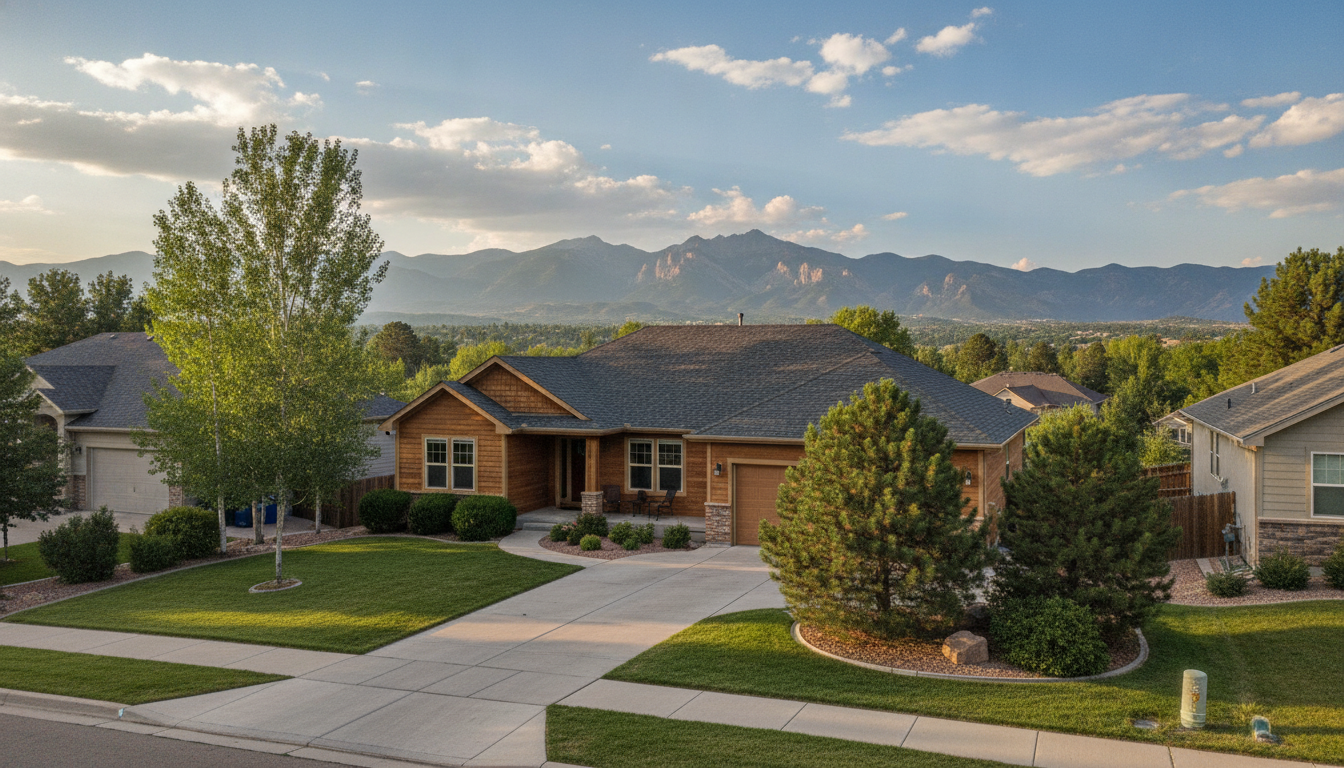
Drip edge is the L-shaped metal flashing installed along a roof's eaves and rake edges to direct water off the deck and into the gutter, instead of letting it run down behind the fascia board or wick back under the shingles. It's a thin strip — usually aluminum, sometimes galvanized steel — but it's one of the few components on a roof that's explicitly required by building code rather than left to a contractor's judgment.
Homeowners often confuse it with ice and water shield, since both show up at the eaves during a re-roof. They're different products doing different jobs: ice and water shield is a waterproof membrane that seals around nail penetrations, while drip edge is metal flashing that controls where water physically exits the roof assembly. A properly built eave has both, layered in a specific order.
What Drip Edge Actually Does
Without drip edge, water running off the shingles at the roof's edge can cling to the underside of the material — a phenomenon roofers call surface tension or "capillary action" — and travel back toward the fascia and soffit instead of dropping cleanly into the gutter. Over years, that misdirected water rots fascia boards, stains soffits, and can work its way into the roof deck's edge, which is usually the first place plywood sheathing starts to delaminate.
The flashing solves this with a simple hemmed edge that breaks the water's contact with the surface below it, forcing a clean drip line off the front of the metal. It's a small detail, but it's doing a specific mechanical job that shingles alone can't do at an edge.
C-Style vs. T-Style Profiles
Drip edge comes in a couple of common profiles. C-style (also called L-style) has a tighter angle that sits close against the fascia — it's the more common profile on standard residential re-roofs. T-style (sometimes labeled F-style) has a taller vertical face and a deeper flange, giving more coverage where fascia boards are thicker or where the home has taller box gutters. Both versions do the same core job; the choice usually comes down to fascia depth, gutter style, and what matches the rest of the home's trim profile. Metal gauge and finish (mill, painted, or color-matched) are separate specification choices layered on top of the profile.
Eaves vs. Rakes: Two Different Installation Sequences
This is the part that trips up DIY re-roofs and shortcut installers. At the eaves — the horizontal bottom edges where water actually runs off — drip edge is installed first, directly against the roof deck, and the underlayment (felt, synthetic, or ice and water shield) goes on top of it. That sequence lets water that gets under the shingles drain over the drip edge and off the roof rather than soaking into the fascia.
At the rakes — the sloped edges running up the sides of a gable — the order flips. Underlayment goes down first, and the drip edge is installed over it. Rakes handle wind-driven rain differently than eaves handle runoff, and the code sequencing accounts for that. A roof with the sequence reversed at either edge isn't just a cosmetic error; it defeats the purpose of the flashing.
Why It's Code-Required Now
The International Residential Code has required drip edge at both eaves and rake edges on asphalt shingle roofs since the 2012 edition, under IRC Section R905.2.8.5. The code specifies more than just "install it" — sections must overlap at least 2 inches, extend at least a quarter-inch below the sheathing, run at least 2 inches back onto the deck, and be fastened at intervals no wider than 12 inches on center. Older homes built or last re-roofed before 2012 sometimes have no drip edge at all, or a version that doesn't meet current fastening spacing. Any permitted re-roof in El Paso County today has to bring the edges up to that standard regardless of what was there before.
Colorado Springs Considerations
At 6,035 feet, Colorado Springs sees more freeze-thaw cycling at the roof edge than most markets — meltwater refreezing overnight along the eave is a routine winter event, not an occasional one, especially through the 38–45 snow days the region typically logs each year. That makes the eave sequencing (drip edge under the underlayment, water draining over it rather than into the fascia) more than a code checkbox here; it's the detail standing between a normal winter and a rotted fascia board five years in. On a typical Xactimate-scoped 20-square roof replacement in this market, drip edge and gutter apron price at roughly $4.01 per linear foot as of April 2026 — a modest line item relative to the shingle and tear-off costs, but one that's easy to shortcut on a cash bid and hard to catch after the fact without pulling shingles.
Wondering if your roof's drip edge meets current code? Call (719) 355-0648 or schedule a free inspection — we check eave and rake flashing as part of every roof replacement evaluation.
Frequently Asked Questions
Does drip edge go under or over the underlayment?
Both, depending on the edge. At the eaves, drip edge goes down first, directly on the deck, with underlayment layered on top of it. At the rakes (the sloped side edges), the sequence flips — underlayment goes down first, and drip edge is installed over it. This isn't a preference; it's specified in the building code because each edge sheds water differently.
What's the difference between C-style and T-style drip edge?
C-style (sometimes called L-style) has a simple angled profile that tucks close to the fascia. T-style, sometimes labeled F-style, has a wider vertical face and a deeper flange, which gives it more coverage over the fascia board and a cleaner look with taller gutters. Both do the same job of directing water off the deck; the choice is mostly about fascia depth and gutter type.
Is drip edge really required, or is it optional on a budget re-roof?
It's required. The International Residential Code has mandated drip edge at eaves and rakes on shingle roofs since the 2012 edition, and Colorado jurisdictions enforce that on any permitted re-roof. A roofer who skips it to save material cost is cutting a code-required component, not a cosmetic upgrade.
Can drip edge fail or need to be replaced without a full re-roof?
Yes, more often on older homes. Aluminum drip edge can bend from ice buildup, ladder contact, or wind-driven debris, and once it's dented or pulled away from the fascia it stops directing water where it should. On an otherwise sound roof, a section of drip edge can usually be replaced without pulling shingles, though eave sections tucked under existing shingles take more care to access.
Does drip edge matter for ice dams?
It plays a supporting role. Drip edge doesn't prevent ice dams — that's mostly an attic insulation and ventilation problem — but a properly installed edge keeps water that does back up under the shingles from tracking behind the fascia and into the soffit. It works alongside ice and water shield, not instead of it.